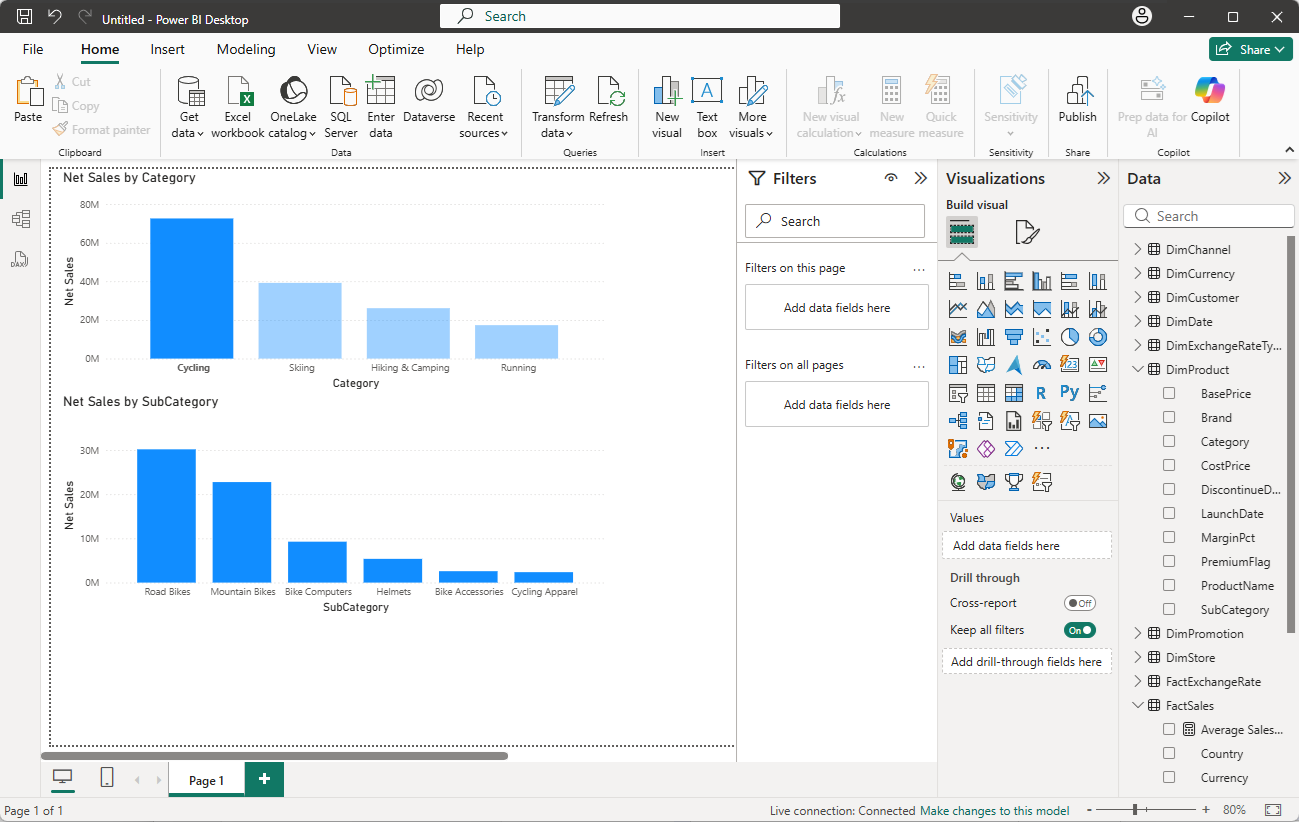
Connecting Power BI to a Self-Hosted XMLA Endpoint
One of the primary goals of DAX-rs is to ensure compatibility with the core BI infrastructure, so connecting to Power BI only takes a few steps.
Setting up a simple backend
If you do not already have your own backend running, you can quickly and easily set up a server with some demo data, as long as you have Docker running.
If you do not have Docker installed, you can find instructions on how to set up Docker Desktop on Windows, Linux and Mac.
After Docker has been set up we need to download the DAX-rs container image:
docker pull ghcr.io/daxrs/dax-rs:latest
Once the download is complete, we run it, telling it to generate demo data and expose it on port 3000:
docker run --rm -p 3000:3000 -e DEMO_DATA_SEED=42 ghcr.io/daxrs/dax-rs:latest
That is all there is to it, we now have DAX-rs running.
Connecting through Power BI
To connect it to Power BI, we start Power BI and create a new “Blank Report”. We then click on “Get Data” and select “Analysis Services”:
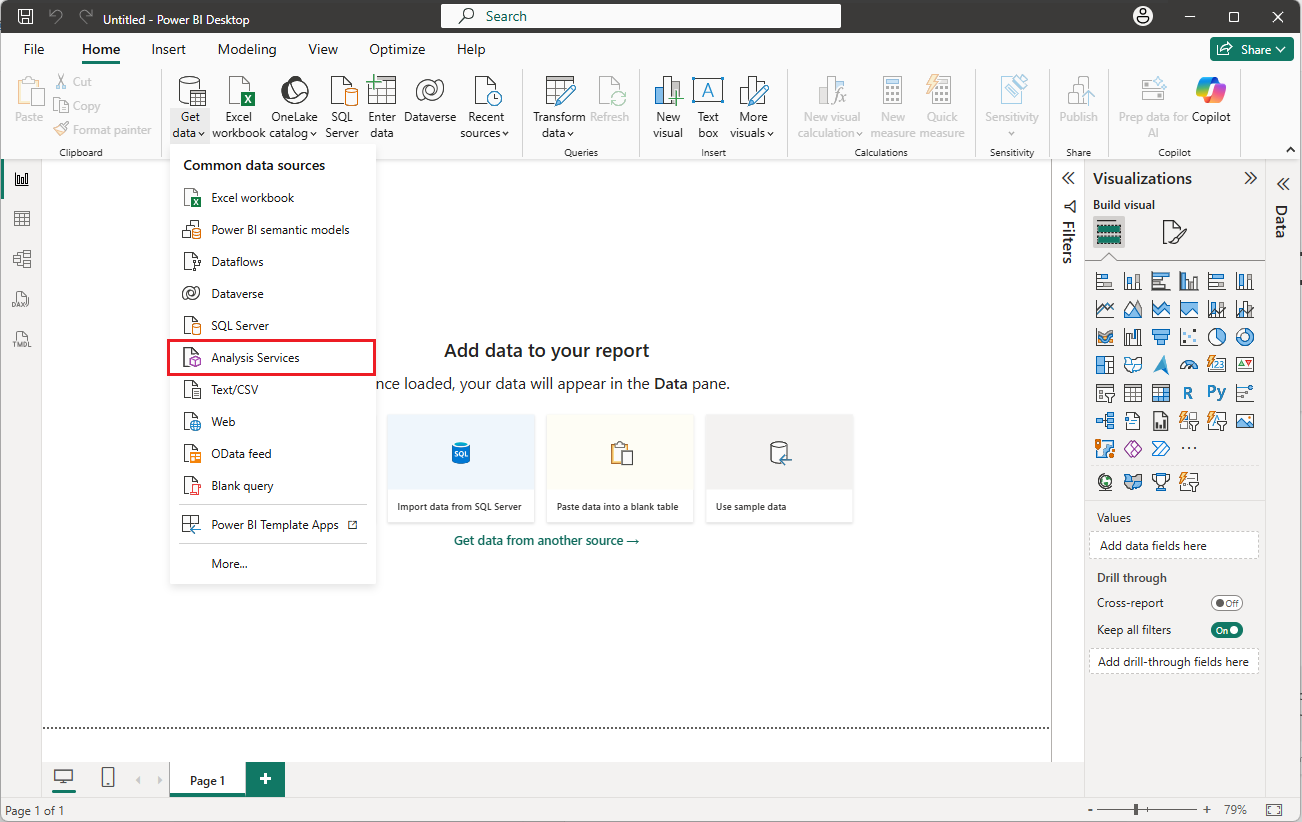
This will present you with a connection window.
If you are connecting to a server running on the same machine, you enter http://localhost:3000/xmla.
If you are connecting to the server from a different PC, you have to replace localhost with the IP address of the server machine.
Make sure that you choose “Connect live” as your connection type.
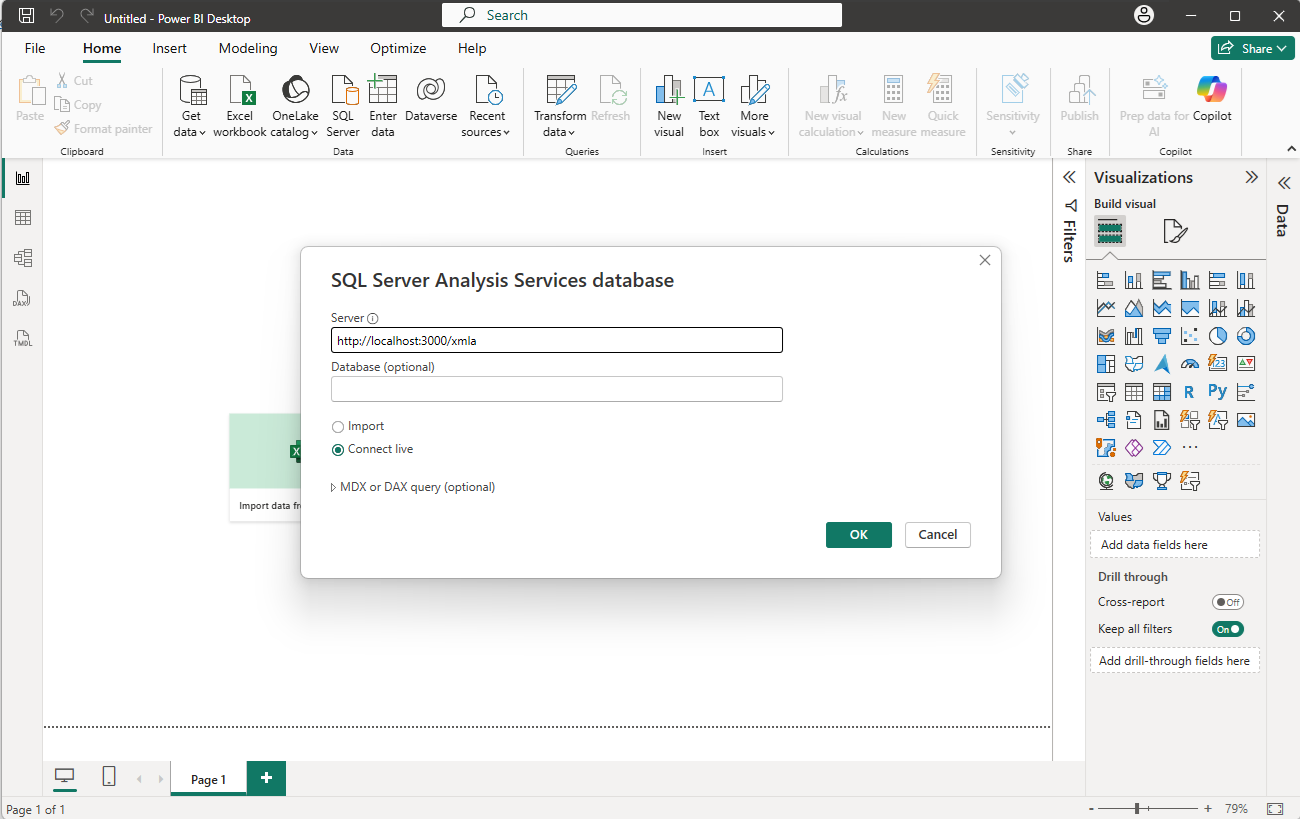
After clicking OK, you will be presented with a list of the catalogs available on the server. If you are using the demo data, select SportRetailer -> Model and click OK.
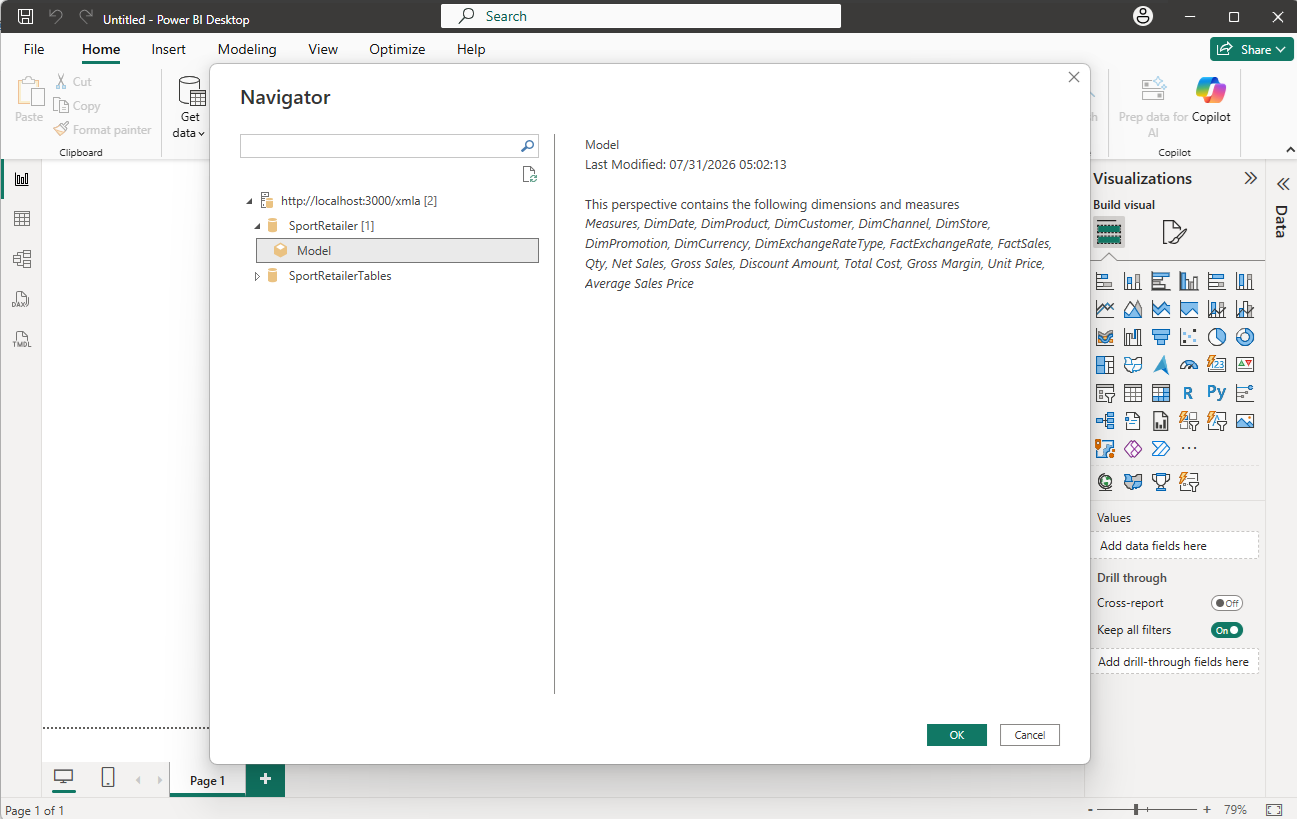
That is it! You now have access to the full data model and can play around with building reports in Power BI.